Архиви - Стр. 2
-
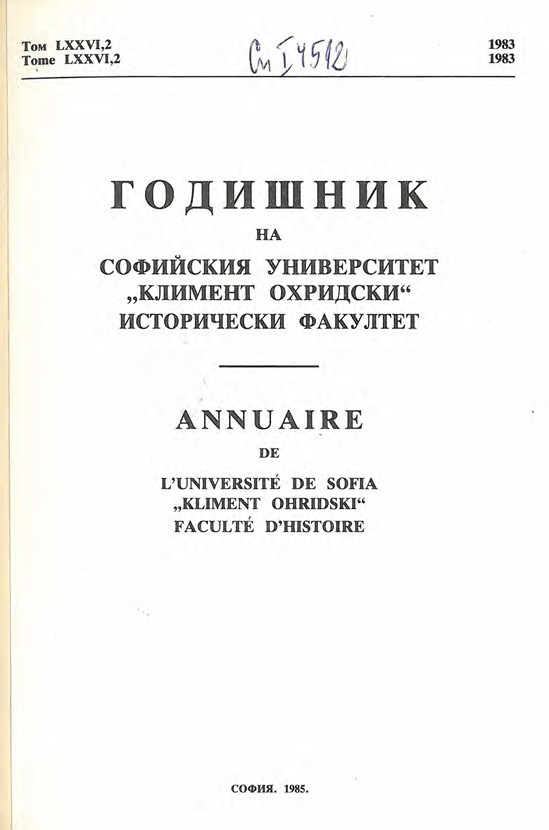
Годишник на Софийския университет "Климент Охридски" - Исторически факултет
Т. 76 Бр. 2 (1983)В т. 76, бр. 2 е публикувана ценната дисертация на археолога Богдан Султов върху античните керамични центрове от района на античния град Никополис ад Иструм. Състои се от три глави, с подоробен анализ на технологията на керамичното производство, което е изключително богато и разнообразно. Илюстрациите са многобройни, детайлни и много прецизно направени. Текстът е на английски език.
-
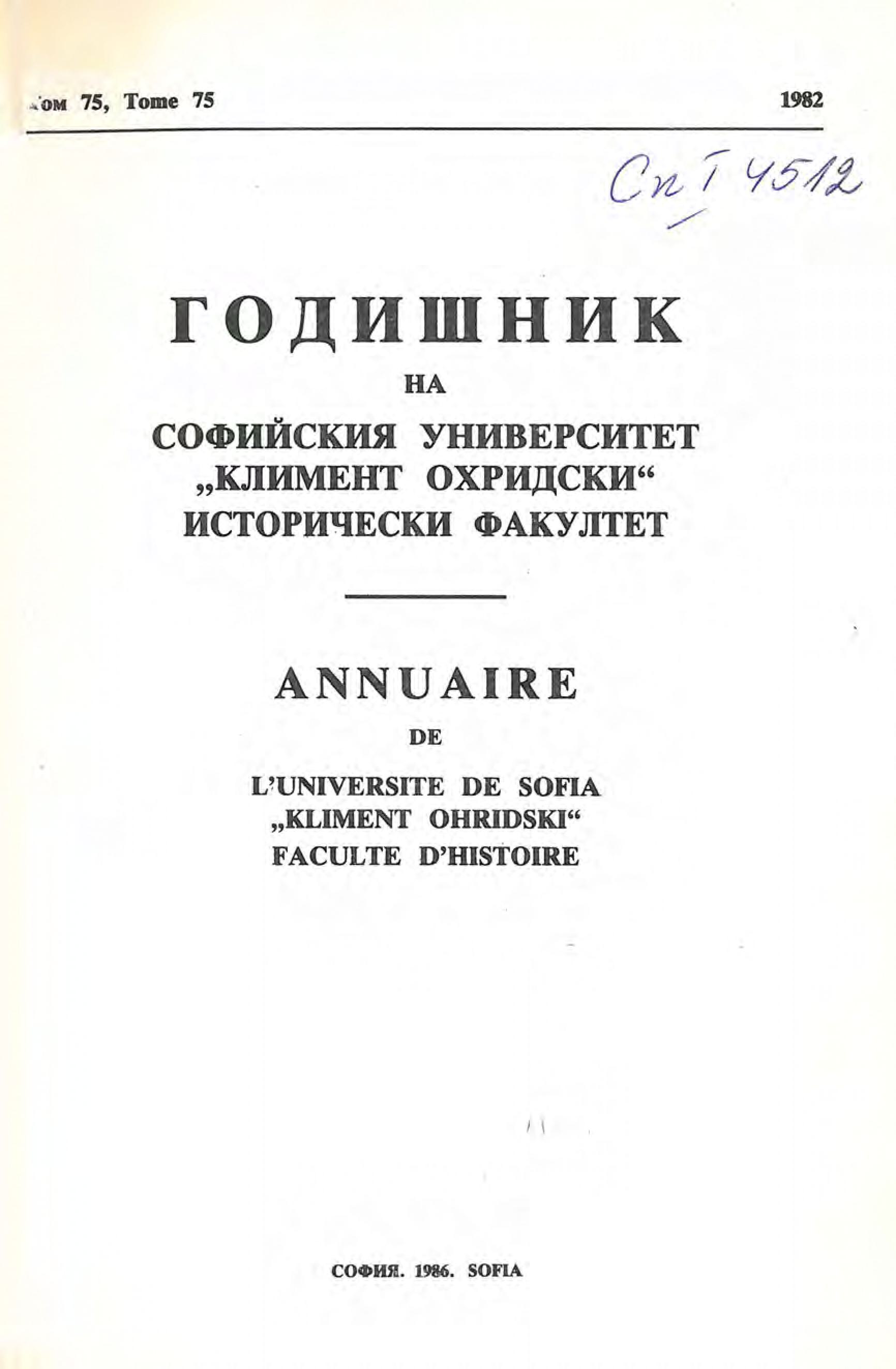
Годишник на Софийския университет "Климент Охридски" - Исторически факултет
Т. 75 Бр. 1 (1982)ГСУ - ИФ, т. 75 съдържа хронологически подредени изследвания от Античността до съвременната история, с резюмета на английски език. М. Тачева разглежда политическата и икономическата криза в Древна Тракия през III в. пр. н. е. Д. Попов прави проучване на обезсмъртяването и практиките му в тракийската религия. Върху дипломатическата дейност на Дионисий Рали се спира М. Йонов. М. Радева анализира ролята на учебниците за възпитанието на национални чувства и самосъзнание за периода 1878 – 1900 г. А. Пантев изследва стратегическите проекти във външната политика на САЩ в края на XIX и началото на XX в. Р. Генов изучава интернационализацията в британското работническо движение от 1900 до 1950 г. САЩ и италианската политика на интернационализация 1946 – 1947 г. разглежда Д. Белоречка. Посветена на мястото на Априлското въстание в марксистката историография е последната статия на М. Велева.
-
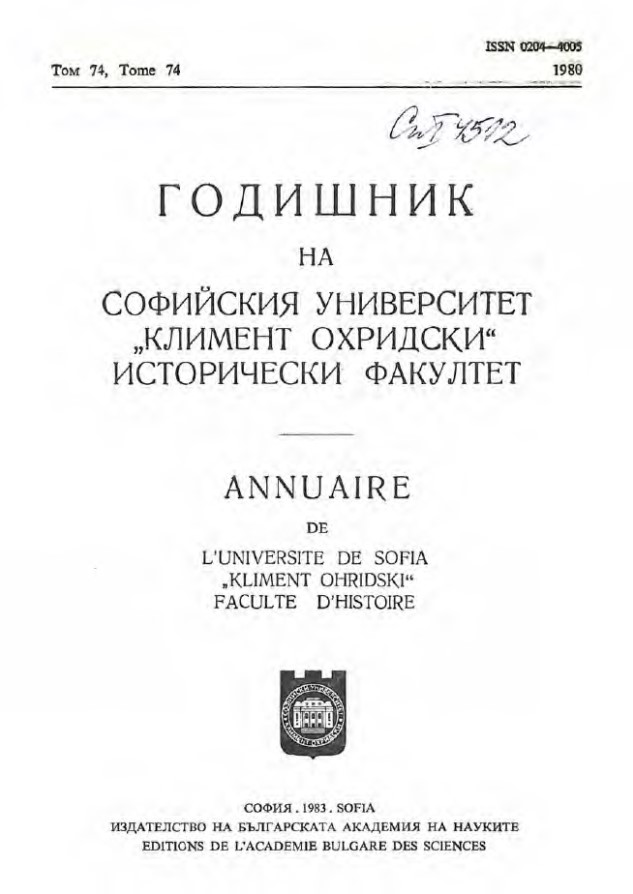
Годишник на Софийския университет "Климент Охридски" - Исторически факултет
Т. 74 Бр. 1 (1980)Том 74 на „Годишника на Софийския университет "Климент Охридски" – Исторически факултет“ (1980, издаден 1983 г.) съдържа девет научни студии, които обхващат широк хронологически и тематичен диапазон – от античността до новата и най-новата история. Първите три статии са посветени на античната история и археология на Тракия: Александър Фол изследва гръцките извори за древна Тракия чрез анализа на „Разказите“ на Конон; Маргарита Тачева-Хитова разглежда култа към Аполон и религиозните процеси в Тракия; Стефка Апрелова анализира традициите в прабългарската керамика от Североизточна България (VII–IX в.). Следва статия на Бистра Цветкова за отношенията между Франция, Балканите и българския народ през XIV–XV в., както и пет изследвания, посветени на новата и съвременната история на България и Европа: Милчо Лалков проследява австро-унгарската и румънската балканска политика през Първата световна война; Иван Илчев анализира отношенията между Англия и България по време на Дарданелската операция (1915 г.); Величко Георгиев разглежда „съгласенофилските“ буржоазни партии в България (1918–1920); Илчо Димитров изследва българския печат в навечерието на Втората световна война (1934–1939); а Мария Матеева представя организацията и проблемите на съветските архиви.
Томът представя висок стандарт на академична работа и отразява тематичното многообразие на историческите изследвания в България през началото на 80-те години. -
Годишник на Софийския университет "Климент Охридски" - Исторически факултет
Т. 73 Бр. 1 (1979)ГСУ - ИФ, т. 73 съдържа студии, които хронологически обхващат времето от XV-XVI в. и XX -то столетие, с резюмета на френски и английски език. Б. Цветкова изследва соколарството в Никополски и Видински санджак през XV-XVI в. на богата база данни, извлечени от османските регистри. Ив. Илчев се спира върху отношенията между Англия и България в периода януари - април 1915 г., във връзка с Дарданелската операция. П. Петков разглежда малко изучаваните отношения между САЩ и България във времето на Първата световна война, и по-конкретно през 1917 - 1918 г. М. Лалков анализира слабо познатите проблеми на турското работническо профсъюзно движение 1945 - 1975 г. Историографската студия на Л. Любенова предлага на читателя кореспонденцията между видните историци проф. Васил Златарски и проф. Петър Ников от периода 1906 - 1930 г. З. Петкова разглежда развитието на библиографската литература в България, така също книгознанието и научната информация. Хр. Стефанов проследява промените в Радикалната партия в България от 1934 до 1937 г.
-
Годишник на Софийския университет "Климент Охридски" - Исторически факултет
Т. 72 Бр. 1 (1978)ГСУ-ИФ т. 72 съдържа статии и студии, които хронологически обхващат проблеми от Античността, Българското възраждане и модерната българска история, с резюмета на френски, английски и немски език. Студията на Ал. Фол анализира щателно фрагменти от първата обща история, "Общи дела", с автор Ефор от Куме, които дават ценни сведения за историята на Тракия и траките. Старобългарското историко-летописно творчество от средата на IX в. до началото на XI в. разглежда М. Каймакамова в обширно студийно изложение. П. Ангелов прави анализ на сложните българо-сръбски политически отношения при управлението на Иван Александър /1331 - 1371/ и Стефан Душан /1331 - 1355/. Основна цел на публикацията на П. Тивчев е да бъде представена историята на Кипър чрез превода на хрониката на Георги Бустрон. Преводът е само на български език, без гръцкия оригинал. Г. Наумов разглежда развитието на Работническата партия в България за периода 1934 - 1939 г. Л. Стоянов се спира върху особеностите на монархическия институт в България, ролята на регентството и по-специално при управлението на Отечествения фронт 9.09.1944 - 8.09.1946 г. Ел. Кирова представя съдържанието на библиотеката на Л. Каравелов, като изхожда от разбирането, че книгите дават представа за развитието му като личност - публицист, писател, общественик.
-
Годишник на Софийския университет "Климент Охридски" - Исторически Факултет
Т. 71 (1977)ГСУ-ИФ, том 71 съдържа студии, хронологически от Средновековието и за историята на България и Европа през ХХ век. Научните изследвания са на български език, с резюмета на френски и английски език. Подробната студия на П. Тивчев разглежда Кипърските Асизи като исторически извори, с аналитично използване на гръцките текстове, отразили съдбоносната история на о-в Кипър в последните десетилетия на XII век. А. Пантев изучава дестабилизацията в англо-руските взаимоотношения и противоречията за периода след Кримската война 1856 г. до началото на Източната криза от 1875 г. Студията на Д. Гоцев се спира в детайли на революционното движение на българите от Вардарска Македония в предвоенния за България период от 1914 - 1915 г., както и за сръбската антибългарска политика в района. Ил. Димитров прави подробен анализ на предпазливата българска външна политика в началото на Втората световна война 1 септември 1939 г. до включването на страната в Тристранния пакт от 1 март 1941 г. Студията на Др. Драганов разглежда политиката на Италианската компартия в следвоенното време от юни 1946 до май 1947 г. и краят на политиката на "Национално единство" в Италия. В изследователски план Р. Генов проследява британската политика спрямо работническото движение и контролът върху производството.
-
Годишник на Софийския университет "Климент Охридски" - Исторически Факултет
Т. 70 Бр. 1 (1976)Том 70 на ГСУ-ИФ съдържа статии и студии от V в. пр. Хр. до началото на Втората световна война. Всички статии съдържат резюмета на френски, немски или английски език. Студията на Ал. Фол анализира гръцки извори за историята на Древна Тракия, конкретно текстове на генеалогисти и митографи от V - IV в. пр. Хр. М. Тачева разглежда паметниците с посвещение на на Хюпсистос от ареала на римските провинции на Балканите. Изследването на К. Йорданов, подкрепено с богати археологически и други материали е посветено на редица дискусионни въпроси от историята на гетите, заемали региона на днешна Североизточна България и румънска Добруджа. Цв. Георгиева публикува пространен анализ на френската политика в Османската империя от началото на XVIII в. В продължение на френската тема, Й. Пеев разглежда влиянието на Наполеоновия поход в Египет върху процеса на национално формиране сред арабските народи. З. Маркова в много детайлната си студия изяснява отрицателната роля на руската политика по българския църковен въпрос за времето след Кримската война до 1864 г. Б. Василева прави принос към изучаването на органиризаните през епохата на националното ни Възраждане женски дружества, поставили началото на еманципацията на женския пол. М. Радева се спира в подробности върху просветната политика на народно-либералната партия в България 1903 - 1908 г. И. Димитров изяснява английската политика към България след Аншлуса до началото на Втората световна война.
-
Годишник на Софийския университет "Климент Охридски" - Исторически Факултет
Т. 69 Бр. 1 (1975)Том 69 на ГСУ-ИФ съдържа разнообразни материали от времето на древните траки до съвременността. Всички статии и студии имат резюмета на немски и френски език. Студията на Ал. Фол прави критичен превод и анализ на текстовете на Теопомп "Гръцка история" и "История на Филип [II Македонски]", като част от обширното авторово дело върху гръцките извори за историята на траките. М. Тачева-Хитова разглежда проблемите при изучаване на култа към Сабазий в Тракия. Студията на Ал. Милчев е продължение на публикацията за Габрово през праисторията и Античността, сега посветена на Габрово през Средновековието. Цялостният преглед на археологическите разкопки и находки от Габровския регион е относно периода VII-XIV в. Ив. Божилов предлага свой прочит на българското присъствие във Византийската империя със студия на френски език, а нейното резюме е на български. М. Радева анализира културната политика на народнолибералната партия /1903-1908 г./ Д. Гоцев разкрива малко известни факти за българските въстания във Вардарска Македония във времето от октомври 1912 до октомври 1913 г. Хр. Стефанов публикува статия, разглеждаща политиката и действията на Радикалдемократическата партия в България 1919 - 1923 г. Ст. Трифонов предла добре обосновано документално проучване, посветено на въоръжената борба на българите от Западна Тракия срещу гръцката власт за периода 1920 - 1926 г. Хр. Мирчева изследва ролята на САЩ за създаването на НАТО.
Дигитализиран и предоставен от Университетска библиотека "Св. Климент Охридски".
-
Годишник на Софийския университет "Климент Охридски" - Исторически Факултет
Т. 68 Бр. 1 (1974)В том 68 от ГСУ-ИФ са публикувани материали от Античността до съвременната обща история и една студия с археологически материали от Габрово. Съдържанието е в началото на тома, като всички статии и студии са на български език с резюмета на френски, немски и английски език. Ал. Фол публикува студия, трета по ред, посветена на гръцките извори за историята на Древна Тракия и по-точно Тукидидовата "Археология", като следва стратиграфсикя принцип на анализ на писмените сведения от един автор. Г. Сотиров разглежда политическите и социалните аспекти на първоначалното разпространение на християнството в Чехия IX-X век. Ел. Савчева анализира в подробности документалите свидетелства за живота и дейността на севастократор Стрез. В статията на Й. Николов Мартин Лутер е характеризиран като човека на епохата между Средновековието и Новото време. Цв. Георгиева предлага добре аргументирана теза за произхода и социалната същност на българските чорбаджии от XVIII в. В. Георгиев навлиза в детайлен анализ на историята на Народния сговор. Хр. Стефанов проследява политиката на Радикалната пария по време на управлението на Демократическия сговор 1923 - 1931 г. Следващите две статии са посветени на съвременната история: М. Лалков предлага своя прочит на сложните българо-югославски отношения в периода септември 1944 - февруари 1947 г. ; Г. Гунев анализира системата на апъртейда в южноафриканската република. Последната студия на Ат. Милчев разглежда с богат археологически материали историческото развитие на Габрово и региона през праисторическата епоха и през Античността.
Дигитализиран и предоставен от Университетска библиотека "Св. Климент Охридски".
-
Годишник на Софийския университет "Св. Климент Охридски" - Исторически факултет
Т. 97 Бр. 1 (2006)Том 96–97 на Годишник на Софийския университет „Св. Климент Охридски“. Исторически факултет включва научни изследвания на преподаватели, докторанти и изследователи, представящи широк хронологически и тематичен обхват – от Античността до края на ХХ век. Публикациите разглеждат проблеми от политическата, социалната, културната и стопанската история в национален и международен контекст. Сред застъпените теми са: ранноримската демографска статистика, културните символи на китайската цивилизация, ренесансовата политическа мисъл за „турската опасност“, дипломатическите практики на средновековните българи, развитието на историческото образование в България, кризите на Ваймарската република, международните отношения през Първата световна война, антисемитската политика в нацистка Германия, българо-германските отношения в контекста на съветската външна политика, просветната система в периода на съветизацията и ролята на електрониката в икономическата политика на България през втората половина на ХХ век.
Изданието отразява интердисциплинарния характер на изследователската дейност в Историческия факултет на Софийския университет и продължава традицията на Годишника като утвърден академичен форум за представяне на оригинални исторически проучвания и методологически разработки.
-
Годишник на Софийския университет "Св. Климент Охридски" - Исторически факултет
Т. 99 Бр. 1 (2007)В т. 98-99 са публикувани материали от модерната и съвременната история, придружени с резюмета на френски и английски език. Д. Григорова проследява формирането на евразийството в Русия. Ц. Керен изследва еврейското общество в Русчук от 1864 г. до Освобождението на България 1878 г. Статията на В. Янчев разглежда специфично явление в българския обществен живот след Освобождението - разбойничеството и ролята на армията за справяне с проблема. Б. Мавров привлича сведения и анализира ирландския национален въпрос от края на XIX и началото на XX в. Кр. Мархолева изследва ролята на САЩ при определяне териториалните граници на Чехословакия след края на Първата световна война. Й. Мантралиев предлага своя прочит на проблема за местната власт при подготовката и приемането на българската конституция от 1947 г.