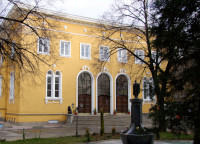
Политиката на Уинстън Чърчил за Съвет на Европа през Втората световна война
DOI :
https://doi.org/10.60053/GSU.IF.1.95.189-225Ключови думи :
Чърчил , Съвет на ЕвропаАбстракт
Като министър-председател на Великобритания (1940-1945) Уинстън Чърчил посвещава голяма част от усилията си на създаването на специална европейска организация, наречена "Съвет на Европа". Изненадваща посока на неговата политика, това е резултат от засилената пропаганда на Хитлерова Германия за доминираната от нацистите Обединена Европа и от намерението на Русвелт-Сталин да обезсмисли европейското влияние в света. Поради вярата си в националния суверенитет Чърчил е противник и на идеите на Съпротивата за Европейска наднационална федерация. Използвайки плановете на Министерството на външните работи за Европейска конфедерация, той предлага Съветът на Европа да бъде организация от 12 държави и конфедерация, всяка с по един представител в нея. Съветът на Европа е подчинен на Върховния световен съвет, чиято основна задача е да запази мира след войната. Между 1942 и 1944 г. тези идеи са изтъкнати в няколко меморандума, реч и един много важен разговор с американците, но те нямаха шанс да се сбъднат поради противоречивото руско (и американско) отхвърляне. Въпреки това в Техеран и Дъмбъртън Чърчил полага някои усилия да убеди своите военновременни партньори, че ще бъде в полза на мира, ако Европа бъде обединена. Така Чърчил намеква за бъдещата си европеистка дейност и реалното формиране на Съвета на Европа през 1949 г., което го прави един от бащите на европейската идея.
Литература (библиография)
Бепшл, Ж. Histoire de la résistance européenne. La “quatrième force” de la guerre 1939–1945. Paris, 1968.
Bepshel, Zh. Histoire de la résistance européenne. La “quatrième force” de la guerre 1939–1945. Paris, 1968.
Fool, M. R. D. Resistance: European Resistance to Nazism 1940–1945. New York, 1977.
Stafford, D. Britain and the European Resistance. A Survey of the Special Operations Executive, with Documents. Toronto, 1980.
Lipgens, W. A History of European Integration. Vol. 1. The Formation of European Unity Movement 1945–1947. Oxford, 1982.
Dumoulin, J.-B. L’idée d’Europe dans l’histoire contemporaine. Paris, 1983.
Чубарьян, А. Европейская идея в истории. Проблемы войны и мира. Москва, 1987.
Chubar'yan, A. Evropeiskaya ideya v istorii. Problemy voiny i mira. Moskva, 1987.
Churchill, W., Roosevelt, F. The Complete Correspondence. Ed. by Warren Kimball. Vol. 2. Princeton, 1984.
Richt, N. Churchill and Europe: The Post-War Vision. London, 1980.
Файлове за сваляне
Публикуван
Брой
Раздел (Секция)
Категории
Лиценз
Авторски права (c) 2003 Rostislav Bojev

Публикация с Creative Commons Attribution 4.0 International License.
Годишник на Софийския университет "Св. Климент Охридски" - Исторически факултет (ГСУ-ИФ).